
Silent Storm in the Heartlands: CVD’s burden rise in rural India: Dr Sushil

STATE TIMES NEWS
JAMMU: In a bid to tackle the growing burden of cardiovascular diseases Head Department of Cardiology GMCH Jammu Dr Sushil Sharma held a day long cardiac awareness cum health check up camp at Hari Prabhu Sanstha Nagrota Gujroo, Billawar. The camp aimed to bridge the gap in healthcare access and to promote preventive heart health, early detection of risk factors and educate rural population about healthy lifestyles.
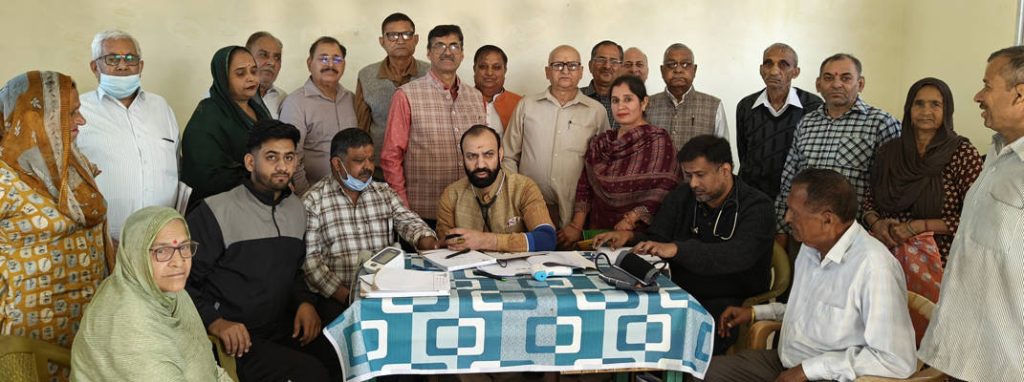
While interacting with the people Dr Sushil stated that cardiovascular diseases have silently emerged as the leading cause of adult mortality in India, transcending geographical and socioeconomic boundaries. Once thought to be confined to urban and affluent populations, these conditions are now deeply entrenched in rural India, where rapid lifestyle transitions, limited awareness, and unequal access to healthcare have created a perfect storm for disease escalation.
He elaborated that India’s epidemiological profile has shifted dramatically over recent decades from a dominance of infectious diseases to the widespread rise of non-communicable diseases. The Global Burden of Disease (GBD) study estimates India’s age-standardized CVD mortality rate at 272 per 100,000, surpassing the global average of 235 per 100,000. The pattern is particularly worrisome due to the younger age of onset, accelerated disease progression, and higher fatality rates among Indian patients. Conventional risk factors like tobacco use, hypertension, diabetes mellitus, dyslipidemia, obesity, physical inactivity, and unhealthy diets collectively account for over 95% of the attributable risk for CVDs. These risk factors, once considered urban phenomena, are now widespread in rural India. Mechanization of work, reduced physical activity, and increasing dependence on processed foods have accelerated the rise in hypertension, diabetes, and obesity even among rural elderly populations.
He maintained that addressing cardiovascular disease in rural India requires shifting the focus from treatment to prevention and early intervention. Primary health centers and community health workers must be empowered and trained to identify hypertension, diabetes, and other modifiable risk factors at the earliest stage. Incorporating routine blood pressure and glucose monitoring, encouraging tobacco cessation, and promoting dietary and physical activity interventions can drastically reduce the incidence of heart disease. Furthermore, community-driven initiatives involving local leaders, educators, and healthcare providers can play a pivotal role in fostering long-term behavioral change. For many economically disadvantaged individuals, under diagnosis and underreporting remain major obstacles. Lack of awareness, poor screening infrastructure, and high out-of-pocket expenditures further compound the crisis. However, the advent of government health initiatives such as the Ayushman Bharat scheme has begun to bridge this gap by providing financial protection and equitable access to essential healthcare services, He Said
Dr. Sushil Sharma added that the escalating burden of cardiovascular diseases in rural India represents a true Pandora’s box an intricate interplay of lifestyle changes, socioeconomic disparities, and healthcare limitations. The way forward lies not only in medical interventions but also in community-based prevention, equitable access to care, and sustained awareness campaigns and emphasized that countering the cardiovascular epidemic requires a multi-pronged approach formulation of evidence-based health policies, strengthening of primary healthcare systems, community education, and promotion of early detection and treatment. He further highlighted that India’s fight against heart disease cannot be won without empowering its rural population with awareness, accessibility, and timely medical care.
Management Committee of the Hari Prabhu Sanstha S C Gupta , Kuldeep Gupta, K L Gupta , Dr G R Gupta, Ramesh Gupta , Deepak Sharma, Sudhershan Sharma , Darshan Gupta and Hardev Singh appreciated the selfless efforts of Dr. Sushil and his team in extending quality healthcare in such a remote area of Jammu province and expressed hope that such outreach programme could be a regular feature in this village.
The Camp was coordinated by Dr Venkatesh Yellupu. Paramedics and volunteers includes Rajkumar , Makhan Sharma , Gokul Jamwal, Shubham Sharma , Rohit Nayyar , Gourav Sharma , Vikas Kumar , Rajinder Singh , Rahul Vaid and Nirvair Singh Bali.
