
Shantmanu inaugurates workshop on Disaster Management at GCW Parade

STATE TIMES NEWS
JAMMU: Additional Chief Secretary (ACS), Higher Education, Shantmanu, on Monday inaugurated a two day division level workshop on Disaster Management Capacity Building for the faculty members of colleges across the Jammu division.
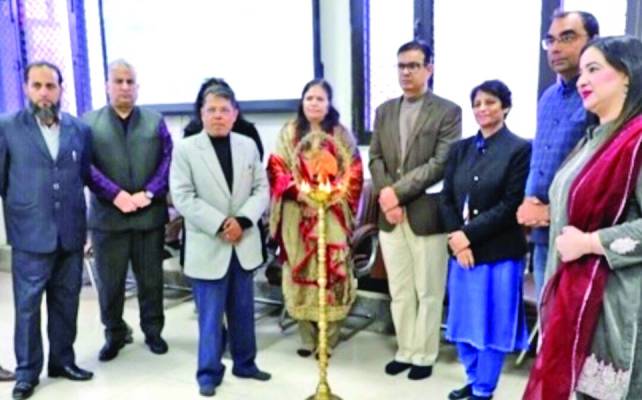
The workshop was organised by the Government College for Women (GCW), Parade in which 100 faculty members participated.
In his inaugural address, the ACS highlighted the urgent need for preparedness, coordinated response systems and robust community engagement to effectively tackle disasters in a region as sensitive and disaster-prone as Jammu & Kashmir.
Director Colleges, Dr. Sheikh Aijaz Bashir, underscored the importance of capacity building in higher education. He emphasized the key role of NSS volunteers and DRR Clubs in spreading disaster awareness at the grassroots level.
Director Finance Higher Education Department, Abdul Majid Bhat, was also present.
Nodal Principal, Dr. Ravender Kumar Tickoo, emphasized the crucial role of educators in shaping a responsive academic community capable of supporting early warning dissemination, basic rescue assistance and community-level awareness. He reiterated that trained DRR Club volunteers and students can serve as vital first responders, especially in remote areas where timely intervention is critical.
The two day programme included technical sessions, live demonstrations and interactive discussions aimed at equipping the colleges with practical skills and enhance institutional disaster response mechanisms.
The workshop focused on disaster mitigation, preparedness and institutional readiness, covering earthquakes, floods, landslides and other region-specific hazards, as Jammu & Kashmir falls in a high-risk disaster-prone zone.
The resource persons from SDRF, NDRF, Fire & Emergency Services and the Regional Institute of Health & Family Welfare, Jammu conducted hands-on sessions on evacuation protocols, first aid, fire safety, risk reduction strategies and psychological preparedness.
The event concluded with a collective commitment to build safer campuses, nurture a culture of preparedness and empower students as ambassadors of disaster resilience within their communities.
