

Prof. (Dr) Jaipal Singh
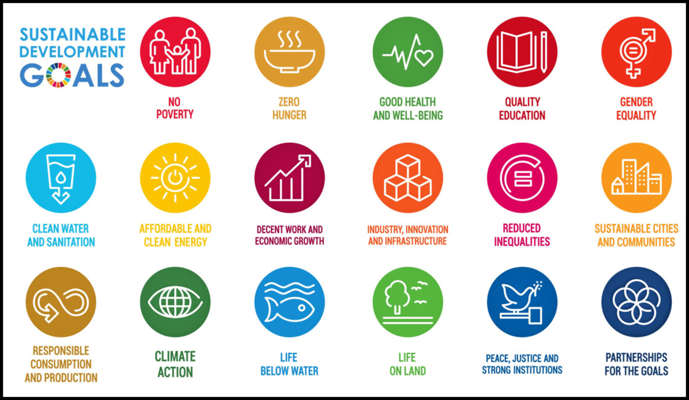
Sustainable Development Goals (SDGs)were adopted at the United Nations Sustainable Development Summit, held at the UN Headquarters from September 25-27, 2015 in New York City. SDGs is a sincere universal call of 193 UN member states to end poverty, ensure prosperity, protect planet, Improve health, education, gender Equality, living standards, clean water, clean energy, life on land, life below water, sanitation, peace, justice and strong institutions …etc.. .Though seventeen goals were set up in September 2015 but these SDGs were launched universally on January 01, 2016 all across developed and developing countries with a target deadline of 2030 for all these seventeen Sustainable Development Goals (SDGs).
In India, several initiatives have been taken like MNREGA (rural employment), PMAY (housing for all), PMKY (income support for farmers) and Jan Dhan Yogna (financial inclusion).
These programs have improved livelihoods for millions but these initiatives are not sufficient and may fall short of target set for 2030 in India and most of the countries of the world, owing to climate related disruptions, income inequality, unprecedented epidemic like corona, inclusive and sustainable growth, that is, growth that benefits everyone and protects the environment too. Strong collaboration between centre and state governments in all its dimensions. Falling short of any one or fall prey of any unprecedented situation may severely hamper the SDG1.
SDG2 targets zero hunger by ensuring food security and promoting sustainable agriculture. SDG 3 ensures good health and well-being for all ages. SDG 4 promotes inclusive and quality education, enabling lifelong learning. SDG 5 seeks gender equality and the empowerment of all women and girls. SDG 6 focuses on providing clean water and sanitation for all. The first six Sustainable Development Goals (SDGs) focus on basic human needs and rights. Together, these goals form the foundation for a just, healthy, and sustainable society, ensuring dignity and opportunity for everyone.
However, sustainable Development Goals (SDGs) 7 to 17 are build on the strong foundation set by the first six goals and focus on broader systems that support human development, environmental protection, peace, and partnership.
SDG7 aims to ensure access to affordable, reliable, sustainable, and modern energy for all. It promotes the use of renewable energy sources like solar and wind to improve energy efficiency. It also supports expanding energy infrastructure in developing regions, helping to reduce energy poverty and protect the environment.
SDG 8 promotes decent work and economic growth. It aims to create sustainable, inclusive employment, reduce unemployment, and ensure safe working conditions for all. The goal supports innovation, entrepreneurship, equal pay and encouraging economic growth that benefits everyone while protecting labour rights and promoting productivity & decent work worldwide.
SDG 9 focuses on building resilient infrastructure, promoting sustainable industrialization and encouraging innovation. It supports technological advancement, increased access to finance & markets and inclusive growth. This goal is vital for boosting productivity, creating jobs, and driving economic development especially in developing countries aiming for long-term sustainability.
SDG 10 aims to reduce inequalities within and among countries by promoting social, economic and political inclusion for all regardless of age, gender, disability, or background. It supports equal opportunities, fair policies and reducing disparities in income, access to services and representation across all groups.
SDG 11 aims to make cities inclusive, safe, resilient and sustainable. It focuses on improving affordable housing, public transport, urban planning, green spaces and disaster risk management to ensure better living conditions and sustainability for growing urban populations especially in developing regions.
SDG 12 promotes the sustainable use of natural resources, aiming to reduce waste, increase recycling, and encourage eco-friendly consumption. It focuses on making production and supply chains more efficient, raising awareness among consumers, and supporting policies that minimize environmental impact to ensure long-term sustainability for people and the planet.
SDG13 calls for urgent action to combat climate change by reducing greenhouse gas emissions, promoting climate resilience and integrating climate-related measures into national policies. It emphasizes early warning systems, disaster risk reduction and international cooperation to protect ecosystems, economies and communities from the escalating impacts of global warming.
SDG 14 aims to protect the world’s oceans, seas, and marine life by reducing pollution, preventing overfishing, and preserving coastal and marine ecosystems. It encourages sustainable fishing practices, conservation efforts and international collaboration to maintain the health of marine environments which are vital for global food security and climate stability.
SDG 15 focuses on protecting, restoring and promoting the sustainable use of terrestrial ecosystems. It works to combat deforestation, halt biodiversity loss and prevent desertification. The goal supports the conservation of forests, wildlife and natural habitats which are crucial for ecosystem balance, climate regulation and human well- being.
SDG 16 promotes peaceful and inclusive societies by ensuring access to justice for all and building accountable as well as transparent institutions. It targets the reduction of violence, corruption and abuse of power while strengthening the rule of law, human rights and participatory decision-making bodies at all levels of governance.
SDG 17 emphasizes the importance of global partnerships among governments, businesses and civil society to achieve all SDGs. It focuses on mobilizing financial resources, sharing technology and enhancing capacity-building especially in developing countries to foster inclusive growth and sustainable development through international cooperation and shared responsibility.
In Gist, SDGs are deeply interconnected. SDG 1 (No Poverty) cannot be achieved without addressing SDG 2 (Zero Hunger), SDG 3 (Good Health) and SDG 4 (Education). Basically, it is thepoverty that oftenly limits access to food / good food, healthcare and learning. Achieving gender equality(SDG 5) boosts economic growth (SDG 8) and reduces inequalities (SDG 10). Clean water (SDG 6) is essential for good health(SDG 3) while affordable energy (SDG 7) – powers homes, hospitals, and schools. Climate action (SDG 13) and environmental sustainability (SDGs 14 and 15) are vital for food, water, and livelihood security. Lastly, strong institutions (SDG 16) and global cooperation (SDG 17) are essential for everlasting progress. Together, all seventeen SDGs form a unified blueprint for a sustainable and equitable world as well as nation too. So it becomes our moral duty to sincerely contribute SDGs and boost the system to reach at logical conclusion along with other countries of the world by 2030. It is imperative to mention here that Finland topped the SDG Index followed by Sweden and Denmark while countries facing conflict or instability such as Yemen, Somalia and Chad are at the bottom of SDGs index with India scored 99th position thereby marking its first entry in top 100’s with a score of 67 out of 100 point scale.
(The writer is Principal SG GDC Doongi, Rajouri)
